

There is no universal “best collagen.” The right purchase depends on why you want it, whether bovine or fish sources fit your diet, how much collagen the label actually provides, and how much confidence you want from independent certification. Our picks are based on current labels, official U.S. prices, ingredient transparency, and verifiable quality signals—not taste tests, reviews, sales rank, or promises on the front of a tub.
This is general educational information, not medical advice. Collagen supplements do not treat a disease. If you are pregnant or breastfeeding, have a medical condition or protein restriction, take medicines, or have a relevant food allergy, review the complete label with a qualified clinician before using one.
Quick picks by priority
- Best simple formula: Vital Proteins Collagen Peptides. One bovine-derived ingredient and the lowest cost per 10 g in this comparison; there is no public finished-product certification cited here.
- Best independently certified sport option: Momentous Collagen Peptides. The exact product appears in the NSF Certified for Sport database; it costs more and includes vitamin C and a branded collagen hydrolysate.
- Best marine option: Further Food Unflavored Marine Collagen. Fish-sourced and pescatarian-friendly, but unsuitable for fish allergy and substantially pricier per gram.
Comparison table
Prices below are one-time U.S. prices checked on September 21, 2026, before tax or shipping. Subscription discounts were excluded. Cost per 10 g is our calculation: price divided by total labeled collagen grams, multiplied by 10. Packaging and prices can change, so recheck the official page before buying.
| Compare | Vital Proteins | Momentous | Further Food |
|---|---|---|---|
| Source and form | Hydrolyzed bovine powder | Bovine peptides and FORTIGEL hydrolysate powder | Hydrolyzed cod collagen powder |
| Labeled collagen | 20 g per serving 14 servings | 15 g collagen protein per serving 30 servings | 6.6 g per serving About 18 servings |
| Added ingredients | None | 50 mg vitamin C | None listed |
| Quality signal verified | Manufacturer states raw-material and finished-product testing and an NSF-certified facility; not presented here as finished-product certification | Exact 507 g product listed by NSF Certified for Sport | Brand states independent lab verification; no public certification record cited |
| Dietary note | Animal-derived; made without dairy or gluten | Animal-derived; NSF listing records gluten- and GMO-free claims | Contains fish; pescatarian, not vegetarian or vegan |
| Official price | $27.00 | $54.99 | $30.00 |
| Cost per 10 g | About $0.96 | About $1.22 | About $2.53 |
How we chose
The same screen for every product
We started with products visible in the current U.S. comparison market, then required an active official product page with a readable formula, serving information, source, and one-time price. We favored a transparent collagen amount over proprietary blends and treated allergens, extra ingredients, and independent certification as separate facts.
We did not turn bestseller position, customer ratings, or a brand’s clinical language into an efficacy score. A study of one peptide formulation does not validate every collagen tub, and a certificate for a factory is not certification of every finished product. The three picks cover meaningful constraints rather than manufacturing extra “winners” for age or gender.
Product cards: why each one fits
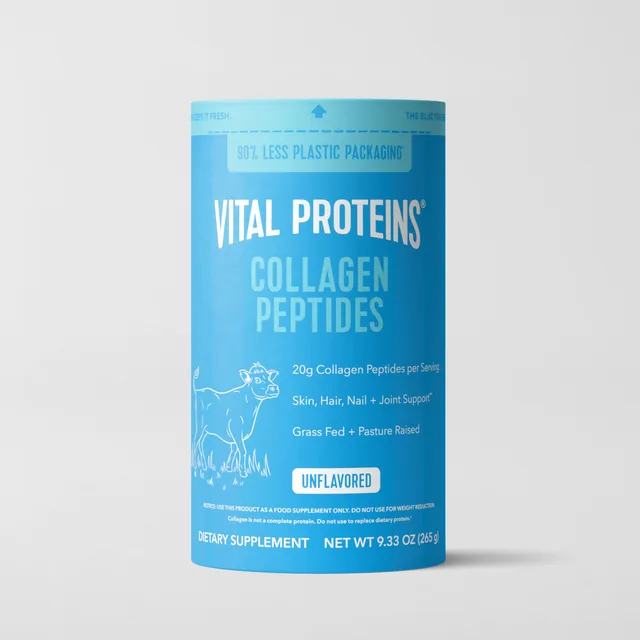
Vital Proteins Collagen Peptides, Unflavored
About $0.96 per 10 g collagen
- Formula & texture
- One ingredient: hydrolyzed bovine collagen peptides; 20 g collagen per serving; unflavored powder.
- Keep in mind
- Bovine-derived and not a complete protein. The manufacturer describes facility certification and testing, not an independently verified certification for this exact finished product.
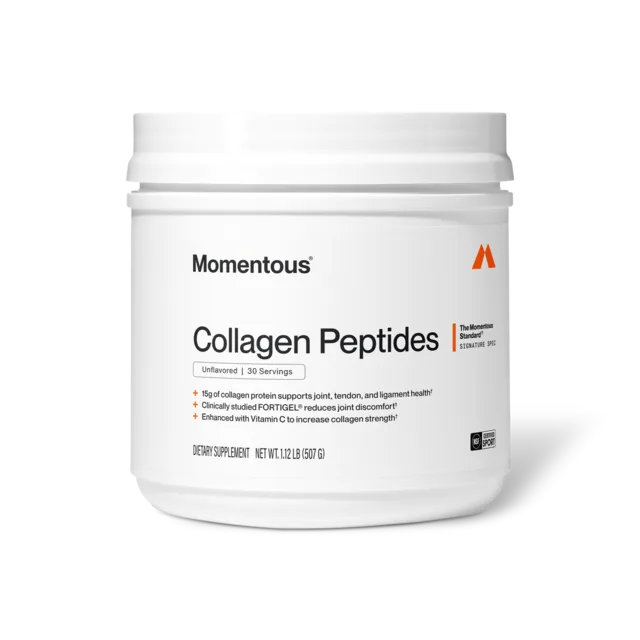
Momentous Collagen Peptides
About $1.22 per 10 g collagen protein
- Formula & texture
- Bovine collagen peptides plus FORTIGEL collagen hydrolysate and 50 mg vitamin C; label states 15 g collagen protein per serving.
- Keep in mind
- Costs more than the simple powders and adds a branded collagen fraction. Choose it for the verified certification, not because its marketing proves a better result for every user.
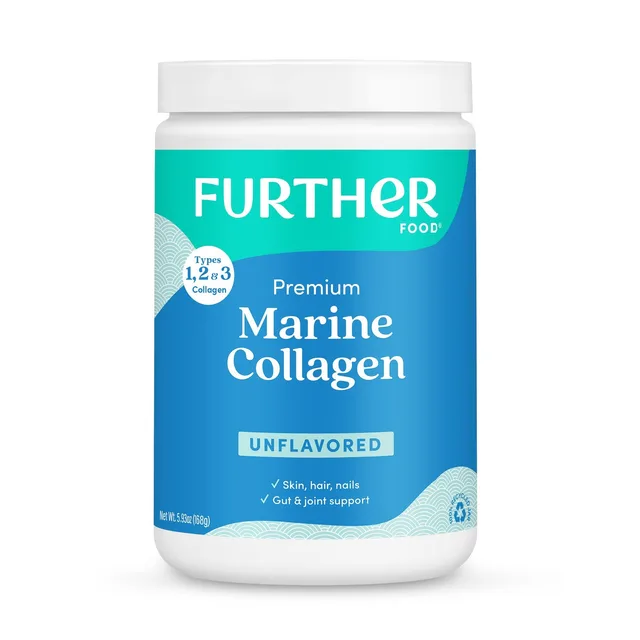
Further Food Unflavored Marine Collagen Powder
About $2.53 per 10 g collagen
- Formula & texture
- Hydrolyzed collagen peptides from wild-caught cod; 6.6 g collagen per serving; unflavored powder.
- Keep in mind
- Contains fish and is the most expensive of these picks per 10 g. The brand says it is independently lab verified, but that is not the same as a public product-certification listing.
Vital Proteins: straightforward, high-dose bovine powder
The official product page lists a 9.33-ounce tub at $27 with 14 servings, and the current product documentation identifies 20 g of bovine collagen peptides per serving. It is the cleanest comparison if your priority is one ingredient and a relatively low price per gram.
The important limitation is quality-language precision. Manufacturing in a certified facility and company testing are useful signals, but neither should be relabeled as an independent certification of this exact finished product. It also remains an animal-derived, incomplete protein.
Momentous: the clearest independent certification
Momentous lists a 507 g, 30-serving jar for $54.99. Its label combines bovine collagen peptides, FORTIGEL collagen hydrolysate, and vitamin C, with 15 g of collagen protein per serving. More importantly for athletes subject to banned-substance rules, the exact product and package size appear in the NSF Certified for Sport listing.
That certification answers a quality-control question; it does not prove that this formula will outperform simpler collagen for your skin or joints. The added cost makes most sense when certified-sport status is a real requirement.
Further Food: a marine alternative, not a superior species by default
The official page lists its unflavored cod-derived powder at $30 and states 6.6 g of hydrolyzed collagen per serving. A U.S. government-hosted Dietary Supplement Label Database record shows a 7.8-ounce package with about 18 servings.
Choose it when fish source or pescatarian compatibility matters—not because “marine” automatically means better absorption or better skin results. In a 2023 meta-analysis, skin-elasticity effects did not differ significantly by collagen source, while the overall literature still had bias concerns. It is also an obvious mismatch for anyone with fish allergy.
What “hydrolyzed collagen peptides” means
Hydrolysis breaks collagen into smaller peptide fragments. In supplement labeling, “hydrolyzed collagen” and “collagen peptides” generally describe this same processing idea. Digestion then breaks proteins and peptides down further; the words do not mean an intact scoop travels directly to facial skin or a painful joint.
Do not confuse hydrolyzed collagen with undenatured type II collagen. They are different preparations studied in different contexts and at very different amounts. More collagen “types” on the front label is not automatically better.
Match source and form to your constraints
Bovine collagen commonly supplies types I and III and is usually economical. Marine collagen is primarily associated with type I and can suit pescatarians, but it carries fish-allergy concerns and often costs more. Chicken-derived products are often marketed around type II; porcine products may conflict with dietary or religious restrictions. Source matters most for allergies, diet, traceability, and whether the studied ingredient resembles the product—not as a simple performance ranking.
“Vegan collagen” deserves a label check. Collagen is animal protein. Many vegan products are actually blends of nutrients intended to support the body’s own collagen synthesis, not collagen itself.
Powder vs. capsules, gummies, and liquids
Powder usually delivers more grams with fewer units and makes per-gram comparison easy. Capsules may be portable but can require many pills to reach the gram amounts used in studies. Gummies and prepared liquids often provide smaller collagen amounts and may add sugars, sweeteners, flavors, vitamins, or biotin. There is no sound basis for assuming a liquid or gummy is inherently absorbed better simply because of its format.
The practical winner is the format whose full serving, ingredient list, and cost you can accept consistently. Compare collagen grams, not only scoop weight or total protein.
Quality signals that actually mean something
Certification, testing, and regulation are different layers
The FDA does not approve dietary supplements for safety and effectiveness before sale. Companies are responsible for lawful labeling and safety; FDA can inspect facilities, monitor reports, and act against adulterated or misbranded products after they reach the market. This is U.S. regulatory information checked September 21, 2026, not legal advice.
An independent program such as NSF Certified for Sport is strongest when the certification database names the exact product and package. A cGMP statement concerns manufacturing practices. “Third-party tested” may be meaningful, but without a named laboratory, test scope, lot number, date, and accessible certificate of analysis, a buyer cannot tell whether the work covered identity, potency, microbes, heavy metals, or banned substances.
When a brand offers a certificate of analysis, match its lot number to your container and check who performed the test, what was measured, the method, and the date.
What the evidence can—and cannot—promise
Skin research is not a settled product-ranking tool. A 2023 systematic review and meta-analysis of 26 randomized trials found improved hydration and elasticity overall but also identified biases and called for larger trials. A later 2025 meta-analysis in the American Journal of Medicine found apparent benefits across all trials, but no benefit in the subsets without pharmaceutical-company funding or in higher-quality studies. That conflict is a reason for modest expectations, not a reason to crown a skin “winner.”
For osteoarthritis, a 2024 trial-sequential meta-analysis of 35 randomized trials reported small-to-moderate improvements in pain and function for collagen derivatives. Those findings concern groups with osteoarthritis and multiple collagen preparations; they do not show that any product in this shopping list treats an individual’s joint pain.
Evidence does not justify promises of instant anti-aging, hair regrowth, weight loss, or disease treatment. Collagen also lacks the amino-acid balance of a complete protein—collagen labels commonly show no tryptophan—so it should not replace a balanced dietary protein or a complete protein powder when muscle protein nutrition is the goal.
Safety and who should check first
- Avoid a source you are allergic to: marine products contain fish, while other formulas can derive from bovine, porcine, chicken, or eggshell materials. Check shared-facility statements too.
- Review every added ingredient, not just collagen. Flavors, sweeteners, botanicals, vitamins, and minerals can change suitability.
- If a beauty formula contains biotin, tell the clinician and laboratory before testing. The FDA warns that biotin can interfere with certain lab tests, potentially producing incorrect results.
- Stop and seek medical advice for signs of an allergic reaction or a persistent adverse effect. Gastrointestinal discomfort can occur with supplements, but symptoms should not be self-diagnosed as “detox.”
- Ask a clinician or pharmacist to review the entire formula if you take medicines, are pregnant or breastfeeding, have kidney disease or another condition requiring protein management, or are buying collagen to address ongoing pain or another symptom.
FAQ
What type of collagen is most effective?
There is no single type proven best for everyone. Match the preparation studied to the outcome you care about, then check source, labeled amount, and product quality. Type I is common in skin-focused products; type II preparations appear in joint research, but hydrolyzed and undenatured type II products are not interchangeable.
Is marine collagen better than bovine collagen?
Not on current comparative evidence. Marine may be the better dietary fit for a pescatarian and the worse choice for someone with fish allergy. Cost and verification can matter more than species.
Are collagen powders better than pills or gummies?
Not inherently. Powders generally make it easier and cheaper to deliver several grams. Pills and gummies can be convenient, but compare the full serving count, collagen grams, sugars, and other ingredients.
How can I tell whether a collagen supplement is third-party tested?
Look up the exact product in the certifier’s database. If a company only says “third-party tested,” ask for a lot-specific certificate that names the laboratory, analytes, methods, and date. Do not treat a certified facility as certified finished product.
Is more collagen types always better?
No. A longer type list does not establish better absorption or outcomes. Dose, preparation, source constraints, and the relevance of the supporting study matter more.
Can collagen replace a protein powder?
Not when you need a complete protein. Collagen is rich in glycine and proline but lacks tryptophan and is relatively low in several indispensable amino acids. Count it as collagen protein, not a like-for-like replacement for whey, soy, or another complete protein.
Bottom line
Start with five checks: the goal, animal source, collagen grams per full serving, a verifiable quality signal, and cost per equal amount. Vital Proteins is the straightforward value pick here, Momentous has the clearest finished-product sport certification, and Further Food supplies a fish-derived alternative. None is a universal winner, and none turns mixed category-level research into a guaranteed personal result.
Have a question or an idea?
Get in touch with the Derma Dossier editorial team.
Contact us