

For a low-cost starting point, our pick is Good Molecules Hyaluronic Acid Serum. For an affordable formula combining several forms of hyaluronic acid with panthenol and ingredients the brand describes as ceramides, consider The Ordinary Hyaluronic Acid 2% + B5 (with Ceramides). If you prefer a gel-cream rather than a watery serum, look at CeraVe Hydrating Hyaluronic Acid Serum. COSRX The Hyaluronic Acid 3 Serum is another formula to compare, but its official single-bottle listing showed a backorder notice when checked.
These are buying recommendations for different preferences—not a claim that one serum hydrates every person’s skin better than the others. The product details behind each choice are linked below.
How we selected these serums
This is a research-based comparison, not a hands-on test. We checked official product pages for current names, ingredient lists, texture descriptions, displayed prices, and purchasing information on September 17, 2026. We did not independently measure hydration, test makeup layering, or verify manufacturers’ sensory claims.
Hyaluronic acid, or HA, is used in skincare as a humectant: an ingredient that attracts and holds moisture. It is only one part of a finished formula. The American Academy of Dermatology’s moisturizer guidance discusses both HA and ceramides and explains why the type of moisturizing product matters.
We favored a short, useful range of prices and formulas over a long list of nearly interchangeable recommendations. The selection labels below reflect cost and documented formulation differences. They do not establish clinical superiority or guarantee suitability for a skin type.
Best hyaluronic acid serums at a glance
Prices are manufacturer-displayed US-dollar amounts checked on September 17, 2026, before tax and shipping—not guaranteed checkout prices or a survey of every US retailer. Good Molecules’ browser page localized shipping to South Korea while displaying USD. CeraVe’s US page displayed a price and retailer-finding options rather than direct checkout. Availability and regional formulas can change.
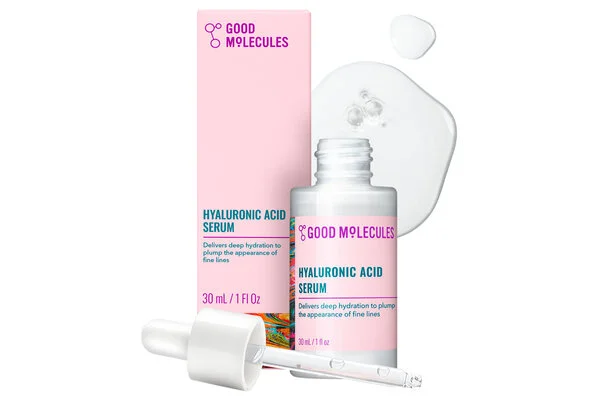
Good Molecules Hyaluronic Acid Serum
$6 per 30 mL*
- Formula & texture
- Brand-described water-light serum; glycerin and sodium hyaluronate; fragrance-free label.
- Keep in mind
- A straightforward formula, not evidence of broader anti-aging performance.
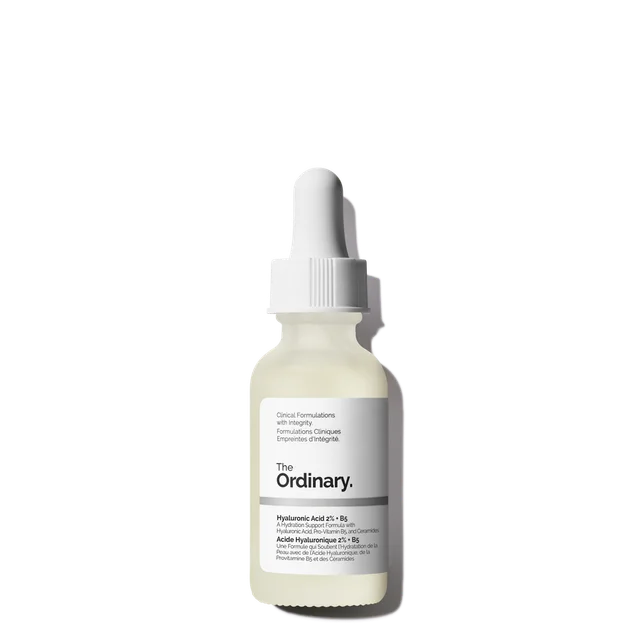
The Ordinary Hyaluronic Acid 2% + B5 (with Ceramides)
$9.90 per 30 mL*
- Formula & texture
- Water-based; panthenol, phospholipids, sphingolipids, and several HA forms; no fragrance/parfum listed.
- Keep in mind
- Check that you are buying the ceramide version, not the original formulation.
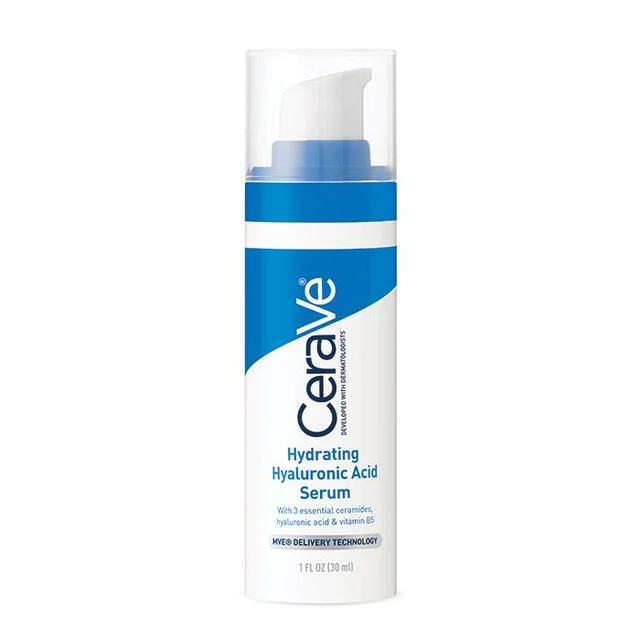
CeraVe Hydrating Hyaluronic Acid Serum
$22.99 per 30 mL*
- Formula & texture
- Gel-cream; glycerin, dimethicone, panthenol, three named ceramides; no added fragrance.
- Keep in mind
- Not a water-light dropper serum. Official page provides retailer-finding options rather than direct checkout.
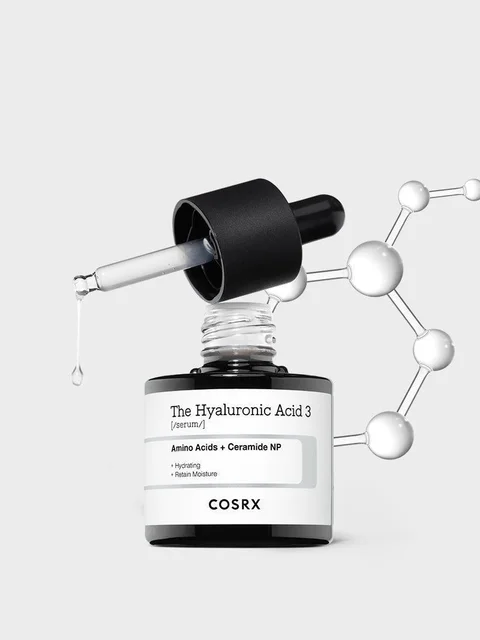
COSRX The Hyaluronic Acid 3 Serum
$37.50 per 30 mL*
- Formula & texture
- Sodium hyaluronate listed at 3%; glycerin, amino acids, Ceramide NP; no fragrance/parfum listed, but Alcohol is listed.
- Keep in mind
- Smaller bottle; official single-bottle listing showed backorder on the check date. Confirm availability before buying.
*Calculated as displayed price × 30 ÷ bottle volume. COSRX’s $37.50 is a comparison figure, not the price of a 30 mL bottle. The other three bottles are already 30 mL; CeraVe’s volume was confirmed on its official product image.
“No fragrance/parfum listed” describes the ingredient list we read. It is not identical to a manufacturer’s fragrance-free claim, and neither wording guarantees that a formula cannot cause irritation. Check your own package before purchase or use.
Our picks: strengths and trade-offs
Good Molecules: best for keeping the initial spend low
At $6 for 30 mL, this is the least expensive option in this comparison. Its official ingredient table lists glycerin and 1% sodium hyaluronate, the sodium salt of HA. The manufacturer describes it as water-light and labels it fragrance-free. Official formula and product details.
Why choose it: you want to try a separate hydrating step without committing to a much more expensive bottle. Its transparent ingredient-percentage table also makes the formula easier to inspect.
Why choose something else: you specifically want a gel-cream format or a product with the additional lipid ingredients found in the other options. A shorter ingredient list is easier to review; it is not automatically more effective or safer.
The brand presents consumer-survey feedback, but that is not a controlled comparison against these other serums. We have not used it ourselves, so we cannot promise that it will feel non-sticky or sit perfectly under your makeup.
The Ordinary: best affordable option for a broader HA blend
The ceramide version costs only $3.90 more per 30 mL than Good Molecules at the displayed prices. Its official page describes five HA types and identifies panthenol—also called pro-vitamin B5—alongside ceramides. The ingredient list includes phospholipids and sphingolipids. Official current formulation.
Why choose it: you want this combination at a relatively low price rather than selecting a product by HA concentration alone.
Why choose something else: you prefer the simplest possible formula or a creamier format. Multiple HA forms are a formulation feature, not proof that this product outperforms a serum containing one listed form.
The brand describes the updated version as lighter and less tacky than its original formula. That is a manufacturer description, not our test result. Check the full product name: older reviews of the original version may not describe the bottle you are buying today.
CeraVe: best for shoppers who prefer a gel-cream format
CeraVe positions this serum for normal-to-dry skin and describes a gel-cream texture. Its current list includes glycerin, dimethicone, panthenol, and Ceramide NP, AP, and EOP. It is labeled free of added fragrance. Official US product page.
Why choose it: the format and ingredient combination are closer to what you want than a water-light serum. That is a more concrete reason to pay extra than simply expecting a higher price to mean stronger hydration.
Why choose something else: you want a low-cost, watery addition beneath a moisturizer you already like. At the listed price, CeraVe costs more than twice as much per 30 mL as The Ordinary.
CeraVe says it can be used alone or under moisturizer. Whether it is enough for your own routine is not settled by that wording. The AAD’s dry-skin guidance on product types favors creams or ointments when more substantial moisturizing care is needed; an HA serum is not automatically a replacement.
COSRX: an alternative if you specifically want its formula
The official list specifies Sodium Hyaluronate at 3%, with glycerin, amino acids, and Ceramide NP among the other ingredients. It also lists Alcohol, so do not assume it is alcohol-free. Official ingredients and purchasing status.
Why consider it: you have a reason to prefer this particular ingredient combination—not merely the largest percentage on the label.
Why choose something else: it is the most expensive option here per 30 mL, and the official single-bottle page showed backorder on our check date. If you need a product promptly, confirm delivery before paying. We have not verified stock at other retailers.
The higher percentage does not establish better results than the less expensive formulas. We would not select it as the overall winner based on that number, nor promise deeper hydration from its name alone.
How to choose for your skin and routine
Start with the problem you want the purchase to solve. Is it the cost of your current serum, a texture you dislike, or dryness your existing routine has not addressed? Those lead to different choices.
- For a small budget: begin by comparing Good Molecules and The Ordinary. Decide whether the latter’s additional formulation features are worth the modest price difference to you.
- For a watery format: inspect the brand-described water-light or water-based options. Those descriptions are useful shopping clues, not a guarantee about feel or makeup compatibility.
- For a gel-cream preference: CeraVe is the clearest format distinction in this shortlist.
- For sensitive or easily irritated skin: review the complete package list against ingredients you already know you need to avoid. Do not rely on “all skin types,” a short ingredient list, or a high price as an assurance of tolerance.
The AAD recommends avoiding fragrance when selecting care for dry skin and emphasizes that natural ingredients are not automatically hypoallergenic. Its advice supports checking the whole product rather than assuming HA is the only relevant ingredient. AAD moisturizer selection guidance.
There is also a perfectly reasonable fifth choice: buy no additional serum. If your moisturizer already does what you need, another bottle needs a purpose beyond having a fashionable ingredient on the front.
Is 1% or 2% hyaluronic acid better?
The percentage alone cannot answer which of these finished products you should buy. Good Molecules’ current table specifies 1% sodium hyaluronate; The Ordinary’s product name says 2% HA and its page describes multiple forms. Those labels do not constitute a direct performance comparison. Good Molecules ingredient table, The Ordinary formulation details.
Ask what the percentage refers to, what else is in the formula, and whether any testing actually compares the products under the same conditions. We did not verify a head-to-head trial of these four serums.
The same caution applies to molecular weight, which describes molecular mass, and to the number of HA forms a brand advertises. Neither is a score for the finished serum. A formula can be interesting on paper without proving that it is the best purchase for your routine.
How to use your serum—and when to stop
This guide is buying information for adult skincare consumers, not a diagnosis, treatment plan, or guarantee of personal suitability. If you have a skin condition, known allergies, or a reaction to a product, seek appropriate professional advice.
Follow the directions for the exact formula you purchase. Good Molecules recommends damp-skin application before creams, while CeraVe describes use alone or under moisturizer. These are product-specific instructions, not a universal schedule for every HA serum. Good Molecules directions, CeraVe directions.
Applying moisturizer while skin is damp is also part of the AAD’s general dry-skin advice. It does not prove that every separate serum must be applied the same way. AAD moisturizing guidance.
The Ordinary advises patch testing, use only on unbroken skin, and rinsing off and stopping if irritation occurs, with physician consultation. Follow your own product’s precautions rather than persisting through discomfort. Official safety directions.
Frequently asked questions
Which brand of hyaluronic acid serum is best?
For the smallest upfront cost in this comparison, Good Molecules is our pick. The Ordinary offers a different ingredient combination for a modest premium; CeraVe offers a gel-cream format. These are distinct buying reasons, not evidence that a single brand is best for everyone.
What should mature skin look for?
Focus on the moisturizing needs of your skin and the complete formula, not an “anti-aging” label alone. This comparison does not establish that any listed serum restores lost facial volume or replaces treatment for wrinkles. A premium-priced serum is not a necessary starting point simply because your skin is older.
Is a more expensive HA serum worth it?
Only if its features are worth the extra cost to you. Price per 30 mL makes that trade-off visible, but it does not measure clinical effectiveness or how long a bottle will last with your usage. Check what you gain before moving to the more expensive option.
Do I need a separate serum if my moisturizer contains HA?
Not automatically. The practical question is whether an additional step solves something your existing routine does not. If you are satisfied with your moisturizer, keeping the routine as it is may be the better purchase decision.
Have a question or an idea?
Get in touch with the Derma Dossier editorial team.
Contact us